


What Makes a Community Work Well? Planning Liveable Communities in Western Australia
It is easy to think about development in terms of individual lots, roads, buildings and infrastructure. But a successful community is more than construction alone.
A thriving community works when people can live comfortably, move safely, access services easily, and connect with others and maintain a healthy relationship with the surrounding environment as it continues to expand. How do we build communities with future wellbeing in mind?
For those working in land development, that outcome starts well before construction. We consider how a site can contribute to the wider area and how the different elements of a development need to work together.
What Makes a Community Liveable?
Several questions help shape a successful community:
Where will people live?
How will they move through the area?
What infrastructure and services will be required?
Where will public open space and community facilities be located??
How will the development connect with surrounding neighbourhoods?
Can the area continue to function as the population grows?

The Role of Green Spaces in Community Planning
In residential communities, the location and quality of green space can influence how people use and experience a place. Parks, tree-lined streets, natural areas and connected open spaces can support:
Recreation and social connection
Walking and active lifestyles
Shade and urban cooling
Stormwater management
Biodiversity
General health and wellbeing
Green space is not simply land left over between development parcels. It is planned with intentionality as part of a community’s broader plan , it becomes important infrastructure that helps a suburb function well.

Connecting Infrastructure, Services and Public Open Space
The same principle applies to roads, drainage, services, public open spaces and connections between different land uses.
Each element needs to be considered individually, but also in relation to everything around it. A road network should support safe and efficient movement. Public open spaces should be accessible and connected. Infrastructure should be planned to meet both current and future needs.
This broader approach helps ensure a development functions as part of its surrounding areas. When pieced together, the completed overall picture is complete and harmonious, rather than operating as single isolated projects..
Planning Communities Across Western Australia
This has been part of Harley Dykstra’s work across Western Australia for more than 40 years.
From residential communities and industrial estates to the expansion of regional townsites and major infrastructure projects, our teams understand how early decisions can influence the way a place works for decades to come.
Projects such as Alkimos Central and the Waroona Townsite Expansion demonstrate the importance of considering development in its broader context. Each project has its own opportunities and constraints, but all require an understanding of the land, planning framework, infrastructure requirements, open space networks and the people who will ultimately use the place.
How Surveying, Town Planning and Project Management Work Together
Accurate information underpins all successful communities.
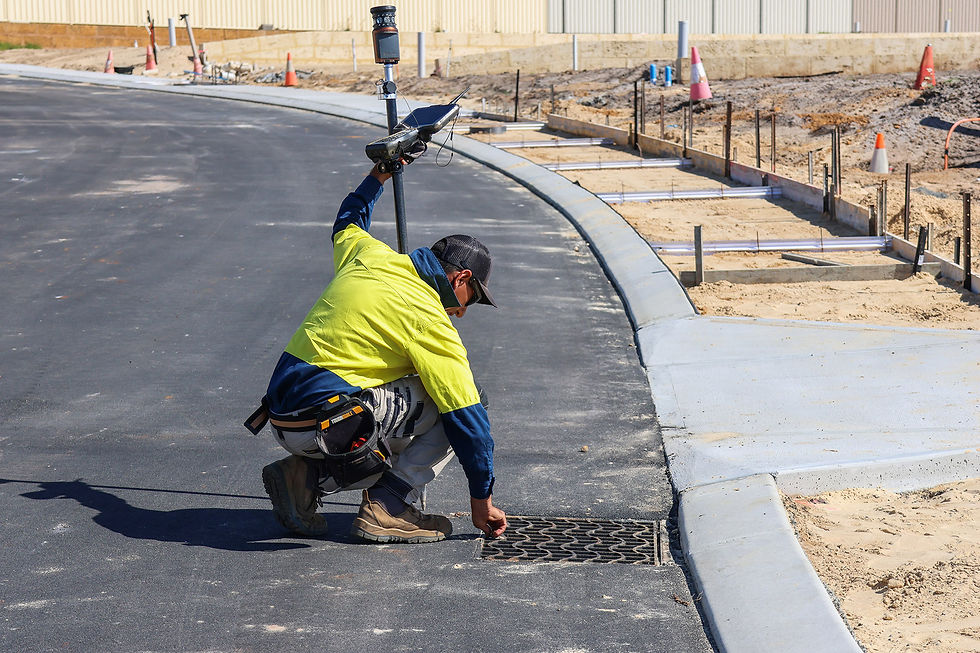
Surveying establishes a site’s physical characteristics, including levels, boundaries, existing features and constraints. Town planning considers what can realistically be achieved within the relevant statutory and strategic frameworks. Project management coordinates the consultants, authorities, approvals, construction requirements and other moving parts needed to progress the project.
No single discipline can answer every question. A successful community depends on how these areas of expertise work together.
At Harley Dykstra, our Surveyors, Town Planners and Project Managers collaborate throughout the development process, from initial investigations and feasibility through to approvals, construction and completion.
This inhouse multidisciplinary approach helps ensure decisions are made with a clear understanding of both the site and the wider community it will become part of.

Let’s talk about your upcoming project.
_______
Sources:

